
Part One: Which Jesus do you worship?
“Omnipotence and impotence, or divinity and infancy, do definitely make a sort of epigram which a million repetitions cannot turn into a platitude. It is not unreasonable to call it unique. Bethlehem is emphatically a place where extremes meet” –G. K. Chesterton 1
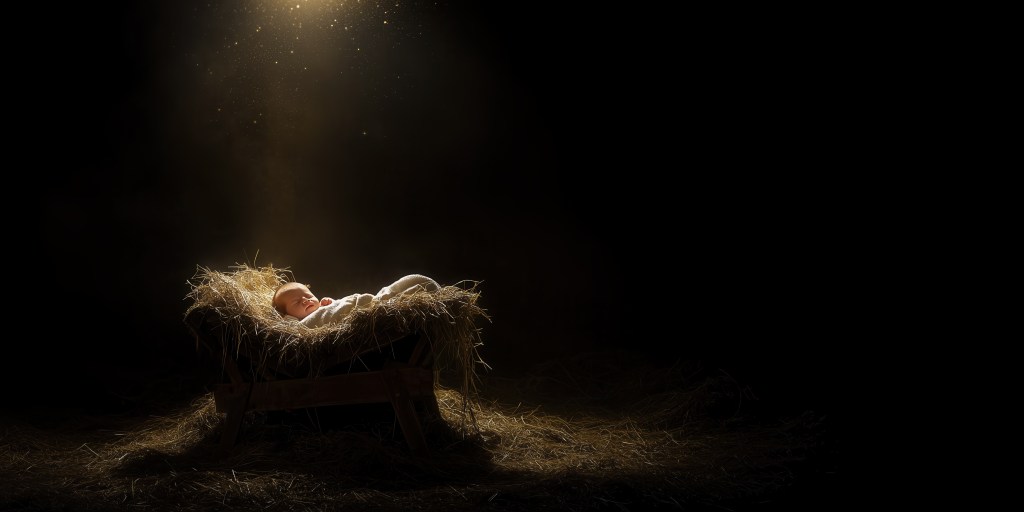
Christ is first revealed to the sleeping world in the form of a newborn baby. This version of Jesus is, by far, the most palatable to the world at large. For it is only the most degraded, demonic dregs of humanity which are not in some way inwardly softened by the sight and sound of a tiny infant. We are drawn to innocence; we hover in concern over helplessness. We are charmed by beauty.
The praise in heaven spills over into the dark skies of Judea. The announcement of good tidings of great joy ring out and bounce across the foothills of Bethlehem. The shepherds fall to the ground in shock and awe, then conclude “Let us now go.. to see this thing which the Lord has made known to us!” 2
The birth of Christ, has arguably, had the most far-reaching influence across all eras and regions of civilization. Though often cloaked in dizzying consumerism and pagan tradition, the celebration of Christmas has infiltrated even the most secular of societies today.
The Magi of antiquity, squint in bewilderment at the appearance of the shimmering royal star, pore through their astrological charts, and then finally saddle their camels and plod westward in search of the King. Even so today, each Yuletide, the pagans, dusting off the old family Bible that lies dormant on the mantle, wiping the cobwebs from spiritually blind eyes, come trooping in to stare in perplexed wonder at the holy child, still sleeping peacefully.
Even so today, each Yuletide, the pagans, dusting off the old family Bible that lies dormant on the mantle, wiping the cobwebs from spiritually blind eyes, come trooping in to stare in perplexed wonder at the holy child, still sleeping peacefully.
Each year in America, as sure as the last brown leaves skitter across frosty fields and the decorative pumpkins and cornstalks find their final resting place in the dumpster- just as surely, the wooden figurines of Mary, Joseph and the shepherds are brought out from the hallway closet; the translucent plastic nativity models find their way into the front yards of middle-class America. And the baby? He still sleeps in the feed trough. Holy infant so tender and mild- sleep in heavenly peace. Ssshhhh! We must not, we MUST not wake him!
That is where most of the world would wish that the Christ child remain. The shepherds return to their fields happy and talkative. The Magi, after a moment of obesience, begin a long trek home, their hearts full, albeit a few pounds lighter and a great deal poorer.
Glory to God in the highest, and on earth peace, goodwill toward men! 3 As the last echoes of the heavenly choir fade back into silent night, a most sinister dynamic begins to take shape around the advent of this peculiar child. The powers of evil are mustering their forces to somehow hijack the divine purpose of the long-awaited Messiah. In an unseen realm where reality dwells, a fiery ten-headed dragon lurks in shadows, waiting to devour the child. 4
For even now, this little boy child elicits a reaction from a local Judean despot that would be a harbinger of the broader Jewish reception to his adult ministry. When his crafty questions to the chief priests and scribes fail to locate the alleged child King, Herod “the Great”, spurred by the gnawing insecurity which often besets such brutal tyrants, resorts to the most shocking measures to insure that his throne is secure. Young sons are ripped from their mothers’ arms and executed on sight. It is a massacre of the innocents. The blood flows red in Bethlehem, and Rachel again weeps for her children! 5 But the Christ Child evades the sword of Herod, saved by a warning dream, sent from his heavenly father to his earthly father.
They flee to Egypt. It is a powerful irony indeed to consider that it was the Egyption Pharaoh, who a millenia and a half before, because of those same insecurities, had instituted his own purge of Jewish baby boys. There was one particular child named Moses, floating among the bulrushes of the Nile, who was saved and would later be called to lead his people forth out of Egypt to the promised land. But this time, Pharaoh would be a refuge for the special child… But not for long. “Out of Egypt have I called my son,” wrote the prophet Hosea. An inspired Matthew the tax collector would later recall those prophetic words, connecting the dots as he traces this incredible narrative of God’s only begotten Son. 6
The magnitude of Jesus’ birth is not lost to everyone, however. Those few faithful souls who were longing and praying, recognized Him immediately.
Simeon, a just and devout man living in Jerusalem waited expectantly for the Consolation. Guided by the Holy Spirit, he came to the temple. He had been promised that he would not see death, until he had seen the Lord’s Christ. Simeon found the Christ in the form of an eight day old baby boy. I can imagine the old man, cradling the baby, with tears of joy streaming down his weathered cheeks. He could die in peace now. “For my eyes have seen Your salvation which You have prepared before the face of all peoples,” rejoiced Simeon. “A light to bring revelation to the Gentiles, and the glory of your people Israel!” 7
Likewise, the aged Anna from the tribe of Asher, who had seen more than a hundred Passover lambs bleed out, would recognize the Lamb of God in an instant. Anna was an ancient fixture of the temple courtyard, kneeling for years upon the cold stones in fervent prayer and fasting, and possibly living off of the occasional kind-hearted gesture thrown down by hurried passersby. Anna had found her Redeemer. And she could not keep silent, speaking of Him to all those who looked for the Redemption in Jerusalem. 8
The little boy is taken home to Nazareth with his parents. He grows and becomes strong in spirit.
It is at this point, that the seeker of truth must make a choice. Will I pretend that the baby is still lying in the manger, or do I continue to follow His life journey? Will I, like his mother, although not fully understanding the meaning of “my Father’s business”, still keep all these things hidden in my heart? 9
It is at this point, that the seeker of truth must make a choice. Will I pretend that the baby is still lying in the manger, or do I continue to follow His life journey?
Indeed, the true worshiper of Christ must, like Him, increase in wisdom and stature. We must follow the dusty path back up to Galilee, where we are drawn to the banks of the Jordan river by the booming voice of a man clothed in camel-hair and leather. A man who flings incendiary accusations at the self-righteous elites. John the Baptist isn’t one to mince words. His listeners’ ears tingle as he fires verbal grenades like “wrath to come”, “brood of vipers”, and “the ax is laid to the root of the trees”.
Now as the people were in expectation, Luke records, and reasoning in their hearts about John, whether he was the Christ or not, he answers the question, pointing to them of One greater who was soon coming. One who would baptize with the Holy Spirit. One who would clean. Purge. Gather. And burn. 10
 Young Again