
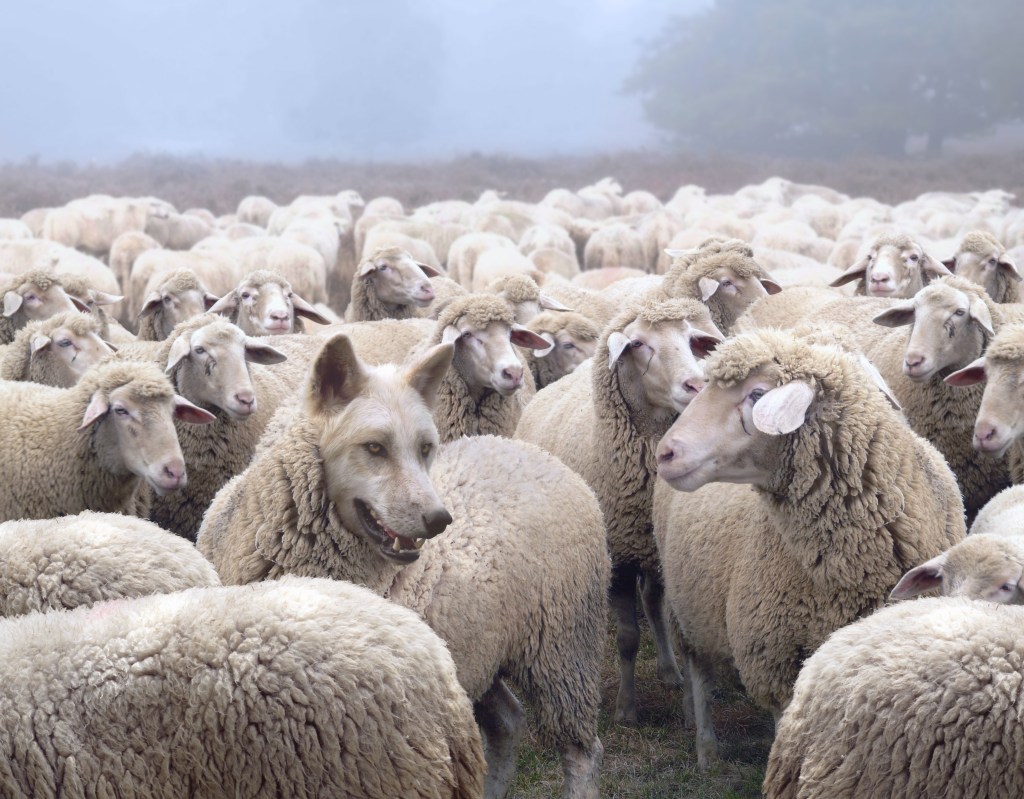
Over the past few weeks, I’ve been asking myself this question.
How does evil present itself outwardly? Is there a way to summarily formulate and categorize the appearance of evil? Would we recognize evil when its staring us in the face?
We live in a world that scrambles to pin the mantle of evil on others. Evil dwells solely in foreign lands, it wears strange clothes, speaks in different languages and participates in weird customs.
And if we are so bold to entertain the possibility that evil might actually dwell within our own borders, we quickly slap it on as a label for the opposing political party or those ill-willed illegal immigrants, and breathe a happy sigh of relief.
Then there is this whole business of deciphering between and choosing “the lesser of two evils” to rule over us. Problem is that somewhere between the campaign trail and the seat of power, the lesser evil has a way of morphing into the greater evil. This tired cycle repeats itself over and over.
In America today, many members of the current party in power claim to be followers of the Suffering Servant of Galilee. But fruit doesn’t lie. And alas, it seems that for every demon they banish, two more hideous ones are summoned to fill the void.
But it doesn’t stop there. This uncomfortable exercise leads us into the Church itself, where the Bride of Christ still contends with the wolves that do not spare the flock. To deny this reality is to deny a promise made by Christ and the Apostles that these things would certainly take place in the last days. (Newsflash: we’re in them!)
No era of the New Testament Church or particular denomination, (including my own) has ever been exempt from the infiltration of evil.
Why? Because the Church is made up of individual people.
Eventually, I find myself standing in front of a full-length mirror, realizing that I too carry within myself such potential for evil.
This is disconcerting.
The answer to this problem of my own personal potential for evil can be found in the book of Hebrews chapter 4, where the Word of God is described as a razor-sharp, double-edged sword which alone possesses the ability to discern between the good and evil that lies within each of us as individuals.
God likes to fix people from the inside out. But, for this to happen, we each need to submit to His Sword. Yes, we need to invite the scalpel.
Near the end of World War II, Russian military commander, Aleksandr Solzhenitsyn, served 8 years in prison for making some disparaging comments about Joseph Stalin. He wrote a three-volume book called The Gulag Archipelago (which I have not read). In it he documents his experiences in Soviet labor camps and shares profound insights of the human condition, including this gem:
“…And it was only when I lay there on rotting prison straw that I sensed within myself the first stirrings of good. Gradually it was disclosed to me that the line separating good and evil passes not through states, nor between classes, nor between political parties either—but right through every human heart—and through all human hearts...”
and this one:
“If only it were so simple! If only there were evil people somewhere insidiously committing evil deeds, and it were necessary only to separate them from the rest of us and destroy them. But the line dividing good and evil cuts through the heart of every human being. And who is willing to destroy a piece of his own heart? ”
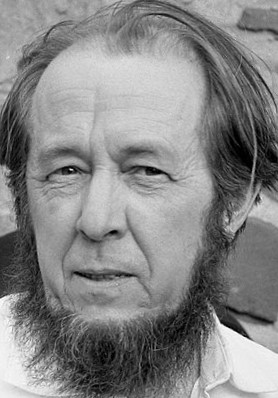
Aleksandr Solzhenitsyn, author of The Gulag Archipelago
Here is my attempt to place my contemplations on the matter into verse:
WHAT DOES EVIL WEAR?
What does evil wear?
It’s easy to spot, of course.
Evil wears swastika patches,
clipped mustaches
In goose-stepping show of force
Evil brandishes Marx’s manifesto
At peasants doomed to die
in service for the cause;
Evil sings praise to Mao’s little red book
to dutiful applause.
Evil looks foreign
in tight-wrapped turbans
and long loose robes.
Huddled close in ancient mountain caves,
Flickering torches cast an evil spell.
Masterminds of sordid terror plots;
Strange tongues uttering
fervent curses
against the infidel.
Where does evil live?
Evil lurks in
left-wing think tanks,
Soros managed funds,
and Democrat convention halls
Evil dwells at nondescript
abortion clinics
with soft bright music
And pale sterile walls.
Evil lives In Hollywood. It roves
through secret back room bargains
and Satanic blood-rituals;
Late-night gatherings
at Bohemian Grove.
Evil is scantily-clad,
seductively posed
at a red-light traffic jam.
It’s late-stage,
open air debauchery
in the desert at Burning Man.
Evil looks like gray-haired,
billionaires with crooked grins
on Caribbean isles;
Black-mailed elites
shape-shifting
through mazes of redacted files
That’s what evil wears.
But one time,
a man in a Soviet Gulag
said that the line between
good and evil starts
not in
classes, parties, or states
but right in every human heart.
And now the rot within the
white-washed sepulchers
spills out before our very eyes
For evil wears neatly-pressed
navy-blue suits,
cuff links,
flag pins,
and fancy matching ties,
Evil is dashing with youthful promise,
waving to ecstatic crowds,
Snake oil for the cameras-
Evil is brilliant, bold and proud.
Within the corridors of power,
Evil cozies up to capitalist corporate shills,
then wipes up blood of innocents
with extra hundred dollar bills
Evil takes communion
on Sunday morning,
Trumpets family values at noon;
And on Tuesday, plans
a rendezvous
with the mistress
in a five-star hotel room.
The Filet Mignon wasn’t cooked to spec;
the caviar didn’t agree-
(There won’t be a tip on the check tonight)
We must hurry back
to the chamber to vote
against this welfare spending spree.
Evil narrates the Lord’s Model Prayer
as subtitles
in some strange movie set
beneath a jarring backdrop of
hypersonic missiles,
machine guns,
and 5th generation fighter jets.
(Forgive us our trespasses
as we seek to destroy
those who would infringe
upon our manifest destiny.
Thy kingdom come, Thy will be done
in step with American hegemony)
And the old prophet’s hands
are shaking
as he strides toward the
chamber of the king;
For the Word is fire in his bosom,
But speaking truth to power
is indeed a dangerous thing.
You are the man!
The camel hair-clad Baptizer
seems to be testing fate;
But crowned adulterers
must be confronted
even if it ends with
his head on a plate
What does evil wear?
The Nazarene
went full scorched-earth
on the vipers who fenced in the law
But weightier truths ignored;
Laying on the backs of common folk
atrocious heavy burdens
that they themselves hadn’t borne.
Spices tithed,
tassels lengthened,
phylacteries enlarged-
He called them fools and blind.
and in the presence of God Himself,
They died,
still looking for a sign
What does evil wear?
O God!
You warned us of those grievous wolves
in skins of lambs
who creep in from the night,
and that even the
prince of darkness
loves to dance
In a garment of shimmering light.
For evil wears religious garb-
Before the flock
speaks high and holy liturgies.
But under the sanctuary
later that week-
perverted old priests in curtained closets
with confused little boys on their knees.
Evil crosses its t’s and dots its i’s,
wears broad-brimmed hats;
Adorns itself in pastel, modest lives.
It preaches long and loud enough to
Dull the conscience and to
mute its victims’ grieving cries.
Evil wears spiritual jargon,
tee shirts
and designer blue jeans;
swaying with the rhythm
of a first-draft worship team.
Friday night is a long way off,
and the spirit is moving
with the fog machines.
What does evil wear?
We can scope the heavens
We can mine hell’s depths
We can search our whole lives long,
But we’ll never find the answer
when the question’s premise is wrong.
But there is the one that pierces deep
between the spirit and soul.
The WORD
divides between marrow and meat-
sharper than a two-edged Sword.
For there, intentions and yearnings exposed;
no creature is hidden from sight.
For we all stand open
and naked
and known
before the Righteous Light.
-JGM (March 2026)


 Young Again